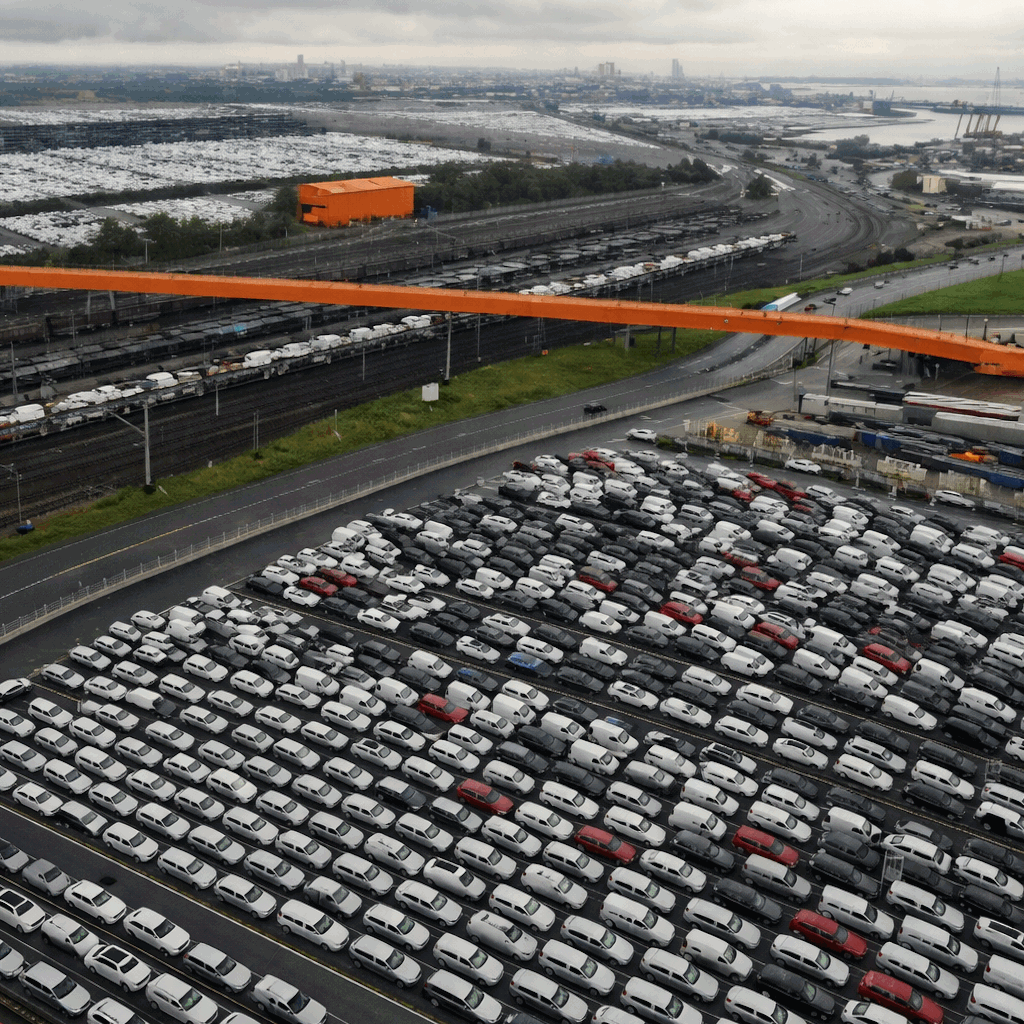
L-Charge mobile EV charging brings power directly to the vehicles, eliminating the need to move cars across large terminals and enabling faster throughput.
Charging Built for High-Volume Vehicle Logistics
The Mobile EV Charging & Roadside Assistance vehicle allows terminal teams to charge EVs wherever they are parked: storage rows, processing lanes, inspection areas, rail loading zones, or port staging areas.
Instead of reorganizing vehicle flow around charger locations, charging comes to the vehicle, improving yard efficiency and reducing handling.
Why Traditional Terminal Charging Falls Short
- Vehicles arrive with low state of charge
- Cold weather accelerates battery drain
- L2 charging is too slow for high-volume processing
- Towing vehicles to chargers increases labor and risk
- Battery packs require frequent recharging and logistics management
- Fixed infrastructure limits flexibility as yard layouts change
These constraints slow vehicle processing and increase cost per vehicle handled.
How L-Charge Improves Terminal Operations
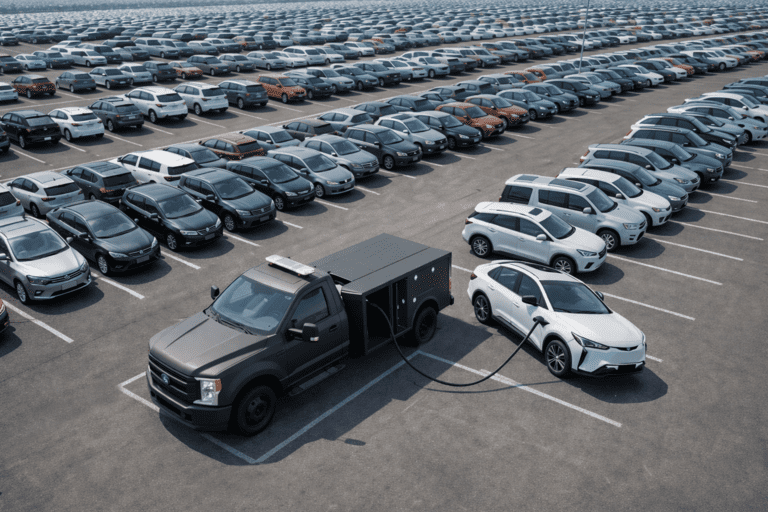
Charge vehicles where they are parked
Eliminate unnecessary vehicle movements across large yards.
Increase throughput
Fast mobile DC charging prepares vehicles for handover, transport, or delivery faster than L2 alternatives.
Reduce labor and handling risk
Fewer vehicle moves means less congestion, fewer touchpoints, and lower damage risk.
Support peak volumes and seasonal surges
Add temporary charging capacity without infrastructure projects.
Provide resilience when chargers are occupied or down
Mobile charging acts as overflow and backup capacity.
Designed for OEM and Port Logistics Workflows
- Charging across large terminal footprints
- Pre-delivery vehicle preparation
- Rail and vessel loading readiness
- Cold-weather SOC recovery
- Temporary programs and new model launches
- Overflow capacity during peak arrivals
Get in touch now to see if we can power your fleet tomorrow.