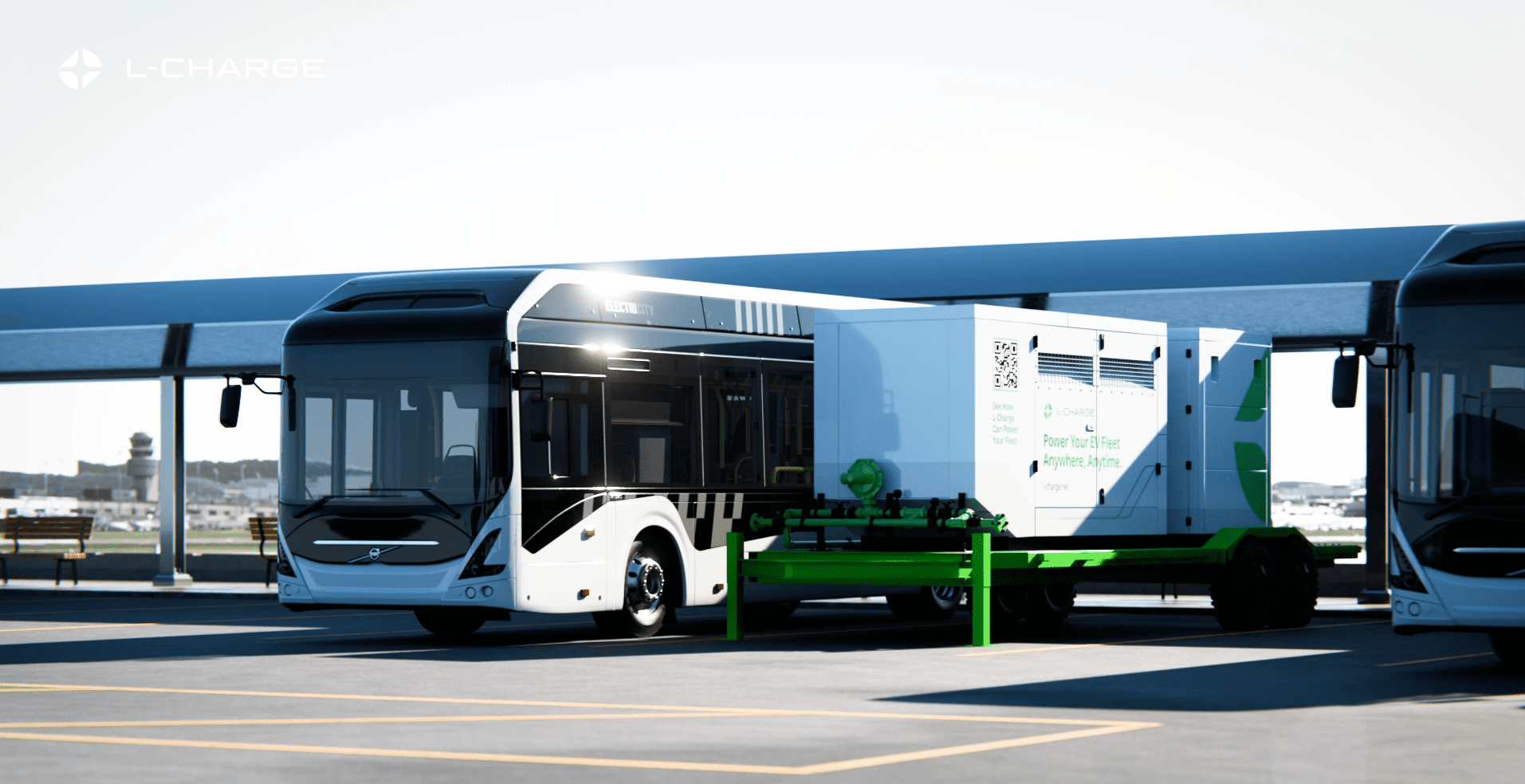
Off-grid EV charging changes that dynamic by removing the dependency on utility upgrades. Instead of waiting for infrastructure, fleets can deploy charging in weeks and start operating immediately.
The Core Problem: Grid Delay
Most EV projects don’t fail on strategy – they fail on timing. Utility upgrades, permitting, and site works create long lead times and unpredictable schedules. For fleet operators, that translates directly into delayed revenue and constrained growth.
In practice, it often means fleets scale more slowly than planned, or compromise on site design just to match available power.
What Off-Grid EV Charging Is
Off-grid EV charging means the charging infrastructure is powered independently of the grid, typically through on-site generation systems. From a driver’s perspective, nothing changes: it’s still DC fast charging.
The difference is simple. Power is produced on-site rather than delivered through a utility connection.
This allows deployment regardless of grid availability, while still supporting high-performance fleet operations.
Why It’s Gaining Traction
The shift toward off-grid is driven less by ideology and more by execution.
It enables fleets to deploy infrastructure in weeks instead of years, which immediately unlocks vehicle utilization and revenue. It also removes the need for heavy upfront infrastructure investment, replacing it with service-based models that include installation, operation, and maintenance.
Equally important is flexibility. Sites are no longer locked into permanent electrical builds. Systems can scale with fleet size, move with operations, or continue running as backup once grid power arrives.
Where It’s Used
Off-grid EV charging is being adopted most quickly in fleet environments where uptime and speed matter most: last-mile delivery, rideshare depots, and transit operations. It is also increasingly relevant in airports, ports, and emerging autonomous vehicle networks, where grid access is limited or uneven.
In all these cases, the pattern is consistent: waiting for the grid is no longer compatible with operational timelines.
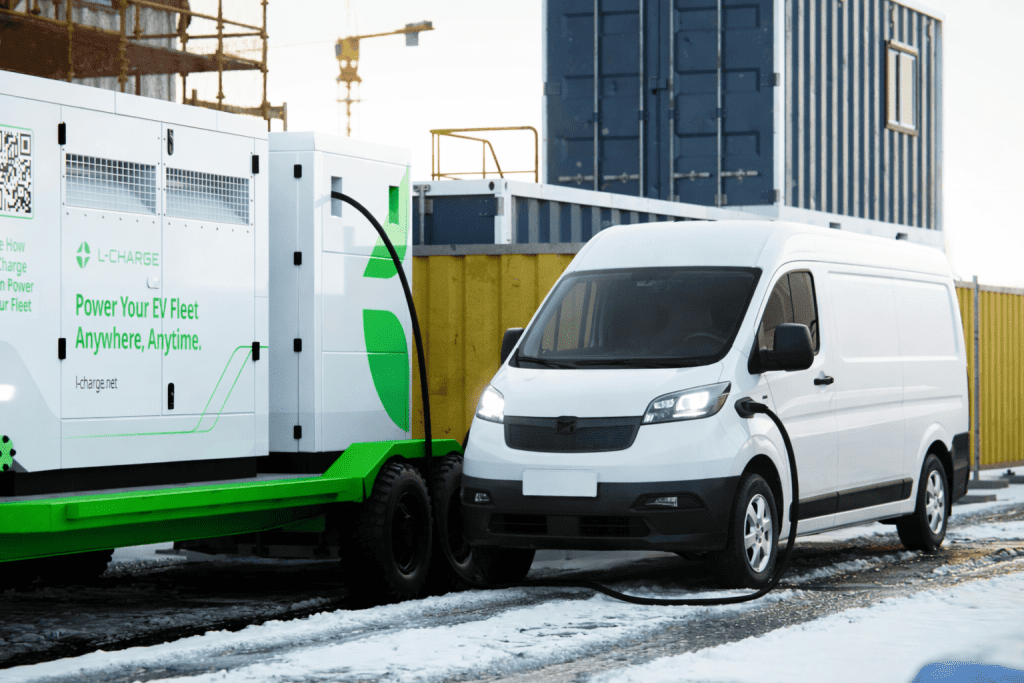
How It Works
A typical system combines on-site power generation with DC fast chargers connected directly through modular infrastructure. The setup is designed for rapid deployment and scalability rather than long construction cycles.
Once grid power becomes available, the system can transition, integrate, or remain in place as backup or peak support.
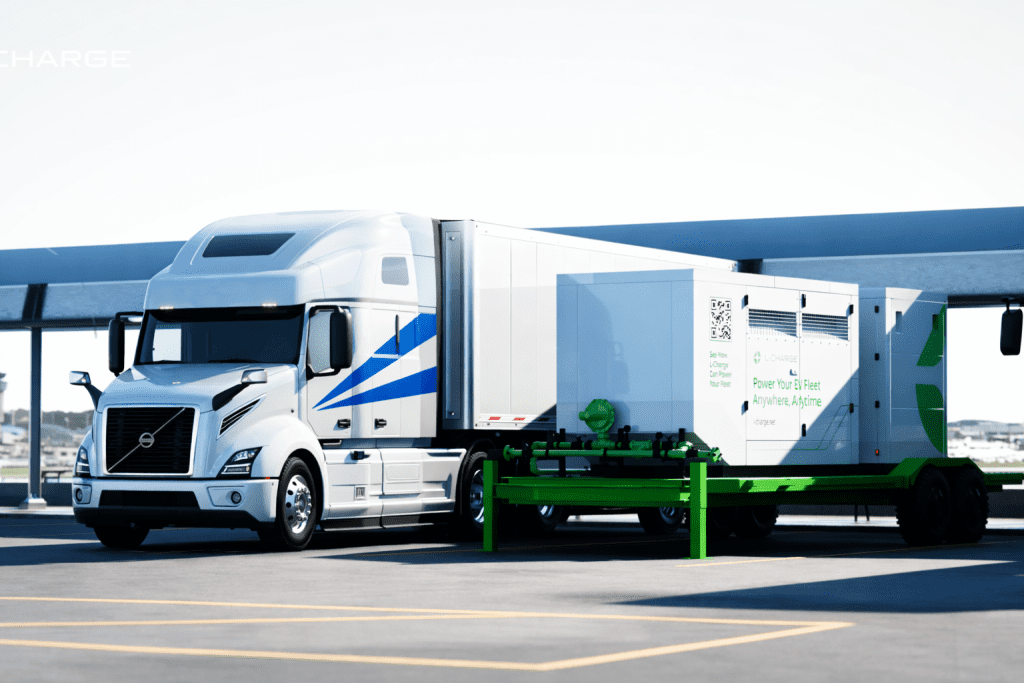
Off-grid EV charging is not a temporary workaround. It is a practical response to a structural mismatch between electrification speed and grid readiness.
It allows fleets and infrastructure operators to deploy now, scale as needed, and avoid being constrained by utility timelines that no longer match the pace of the market.